
The functional principles and applications of proximity switches in SMT automation equipment
Dec 31, 2025
The sensing head of an inductive proximity switch is an inductive coil with a ferrite core and can only detect metal objects.
Proximity switches are a type of switching sensor (i.e., a non-contact switch). They possess the characteristics of limit switches and microswitches, while also having sensing capabilities. They are reliable in operation, stable in performance, have a fast frequency response, a long service life, strong anti-interference capabilities, and are waterproof, shockproof, and corrosion-resistant. Products are available in inductive, capacitive, Hall effect, AC, and DC types.
Proximity switches, also known as non-contact proximity switches, are ideal electronic switching sensors. When a metal object approaches the sensing area of the switch, the switch can quickly issue an electrical command without contact, pressure, or sparks, accurately reflecting the position and travel of the moving mechanism.
Even for general travel control, their positioning accuracy, operating frequency, service life, ease of installation and adjustment, and suitability for harsh environments are far superior to general mechanical limit switches.
They are widely used in machine tools, metallurgy, chemical industry, light industry, textiles, and printing industries. In automatic control systems, they can be used as limit switches, counters, positioning controls, and automatic protection elements.
I. Functions of Proximity Switches
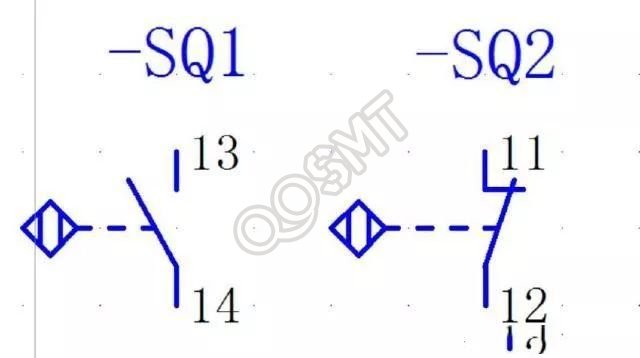
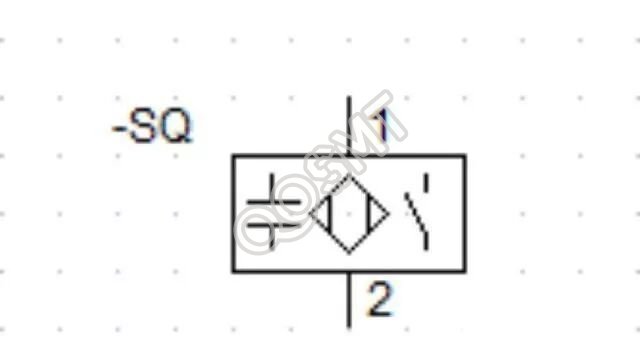
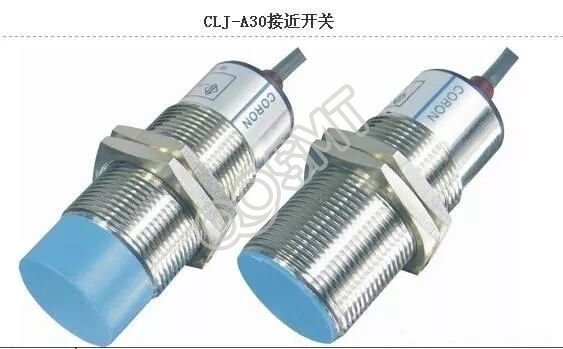
It consists of a sensing head, a high-frequency oscillator, an amplifier, and a housing. The physical diagram and graphic symbols of a proximity switch are as follows:
Proximity switch graphic symbol (SQ)
II. Classification and Working Principle of Proximity Switches
According to the working principle, they can be divided into inductive, capacitive, photoelectric, and magnetic types. According to the type of circuit current, they can be divided into AC and DC types.
1. Inductive Proximity Switches
The sensing head of an inductive proximity switch is an inductive coil with a ferrite core and can only detect metal objects.
The oscillator generates an alternating magnetic field on the surface of the sensing head. When a metal object approaches the sensing head, the proximity switch activates internally, thus achieving "on" and "off" control.
2. Capacitive Proximity Switches
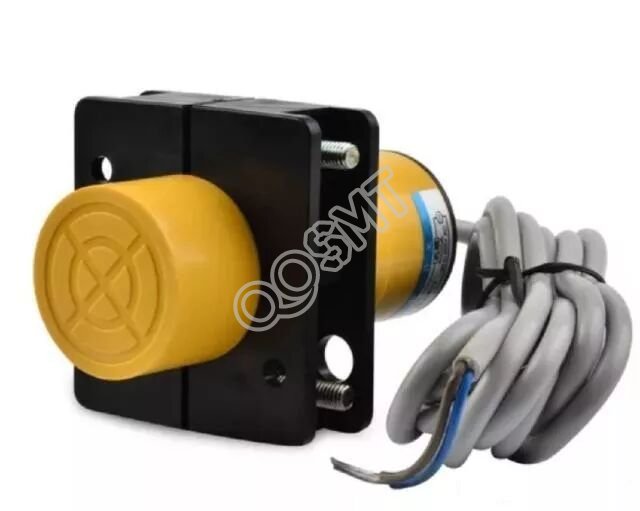
The sensing head of a capacitive proximity switch is a circular or square flat electrode, which forms a distributed capacitance with the ground wire of the oscillating circuit. When a conductor or other dielectric approaches the sensing head, the capacitance increases, causing the oscillator to stop oscillating, and the shaping amplifier outputs an electrical signal. Capacitive proximity switches can detect metals, non-metals, and liquids.
3. Magnetic Proximity Switches
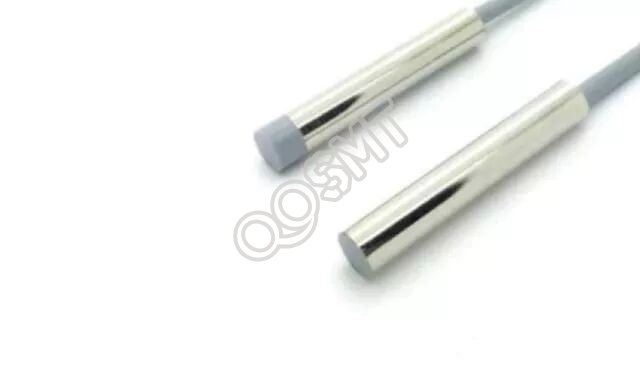
Magnetic proximity switches mainly refer to Hall effect proximity switches. Their working principle is the Hall effect. When a magnetic object approaches the Hall switch, the state of the Hall proximity switch changes, for example, from "on" to "off".
4. Photoelectric Proximity Switches
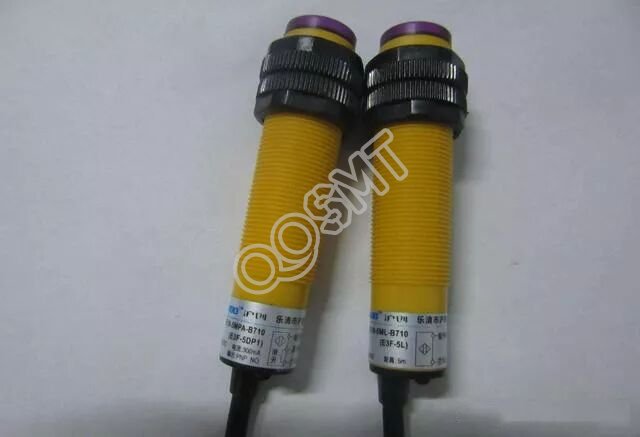
Sensors made using the photoelectric effect are called photoelectric sensors. Photoelectric sensors are non-contact control devices that use a light emitter to project light onto a detection object, and a receiver composed of photoelectric conversion elements to detect the presence, absence, and size of the object based on the increase or decrease in light intensity.
According to the output signal, they can be divided into analog, digital, and switching output types. Sensors with switching output are photoelectric proximity switches. They consist of a light emitter (emitting infrared or visible light) and a light receiver (receiving light and converting it into an electrical signal, outputting it in the form of a switching signal).
Photoelectric proximity switches can be divided into through-beam, reflective, and diffuse types.
III. Selection of Proximity Switches
1. Selection of Proximity Switch Type
For detecting metals, inductive proximity switches are preferred; for detecting non-metals, capacitive proximity switches are preferred; and for detecting magnetic signals, magnetic proximity switches are used.
2. Selection of Proximity Switch Appearance
Cylindrical threaded shapes are commonly used, but the choice can be made according to actual needs.
3. Selection of Detection Distance
Select according to needs; the detection distance is usually specified in the manufacturer's specifications.
4. Selection of Signal Output
AC proximity switches output AC signals, while DC proximity switches output DC signals. Note: The load current must be less than the output current of the proximity switch; otherwise, a conversion circuit should be added.
5. Selection of Switching Frequency
The switching frequency refers to the number of times the proximity switch switches from "on" to "off" per second. DC proximity switches can reach 200Hz, while AC proximity switches can only reach 25Hz.
6. Selection of Rated Voltage
AC proximity switches are preferably AC 220V and AC 36V; DC proximity switches are preferably DC 12V and DC 24V. Generally, proximity switches have a wide range of voltage options. As shown in the figure below: